
Reviewed · MONKEY FOREST TOURS
Ubud Sacred Monkey Forest & Art Village Tour
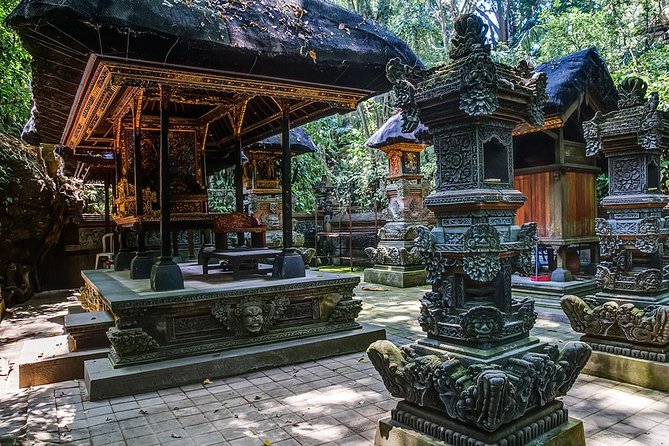
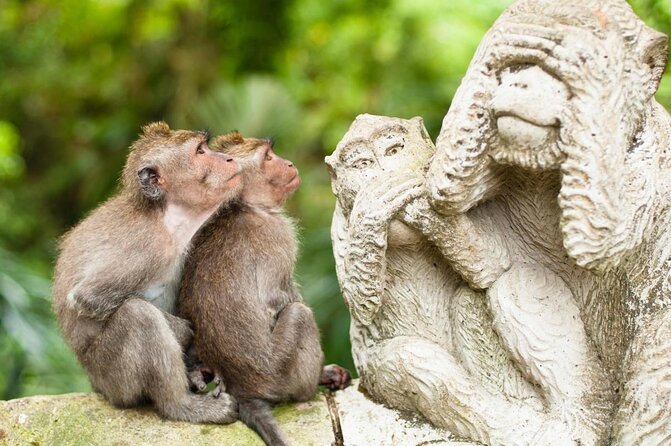
The most memorable part of this half-day outing is the mix of macaques and temple statues inside Ubud’s Sacred Monkey Forest. One minute you are watching monkeys move through the trees, and the next you are looking at old Hindu shrines in a forest that still serves a religious purpose.
I like two things here: the private car keeps the schedule simple, and the route gives you more than a single Ubud attraction. You get a look at Mas wood carving, Celuk silverwork, and the market in the same morning. The main drawback is that one hour at each stop goes quickly, especially if you enjoy shopping or want time for careful photos.
In This Review
- Key points at a glance
- Why this short Ubud route works
- Inside the Sacred Monkey Forest
- Mas and the craft of wood carving
- Celuk Village and Balinese silver jewelry
- Ubud Traditional Art Market
- What the private transport adds
- What the four-hour schedule really means
- What the guide can add
- Who should book this tour
- Final call: good value for a compact Ubud introduction
- FAQ
- Where does the Ubud Sacred Monkey Forest and Art Village Tour take place?
- How long does the tour last?
- What time does the tour start?
- Is hotel pickup available?
- Is this a private tour?
- Is transportation included?
- Is a guide included?
- Is admission to the Monkey Forest included?
- Are meals included?
- Can I cancel for a refund?
Key points at a glance
- Three old temples inside the forest: The Sacred Monkey Forest is both a macaque sanctuary and an important Hindu site.
- A private four-hour route: Your own group travels with an English-speaking driver and air-conditioned vehicle.
- Pickup from south Bali and Ubud: This saves you from arranging separate transport to Ubud.
- Mas for carved wood: The village is known across Bali for traditional wood carving.
- Celuk for silver jewelry: You can browse artisan jewelry in one of Bali’s best-known craft areas.
- Ubud market to finish: Silk scarves, woven bags, baskets, hats, and light clothing make this the most flexible shopping stop.
Why this short Ubud route works
This tour is built for a first look at Ubud, not for a slow study of Balinese art. In roughly four hours, you move from a sacred forest to two craft villages and then into the center of Ubud. That range is the real appeal.
If your base is Jimbaran or another part of south Bali, round-trip transport matters. Ubud is inland, and reaching these stops on your own means arranging a driver, checking the order of stops, and dealing with Bali traffic. Here, an English-speaking driver handles the route while you sit in an air-conditioned vehicle.
The tour is private, so only your group participates. That gives you more control than a large coach tour, although the fixed one-hour blocks still shape the morning. You can ask questions, request a little more time at a craft stop, or tell the driver that shopping is less important to you. The exact amount of flexibility is not specified, so treat the published four-hour schedule as the guide.
The guides named in the feedback include Kana and Dedy. Kana was especially praised for explaining Balinese culture, local communities, and the island’s past during the drive. Dedy was described as personable and reassuring behind the wheel. You should expect the guide to escort you at the stops and provide commentary rather than simply drop you at the entrance.
More Monkey Forest visits:
- Cretya Ubud and Monkey Forest Sanctuary Tours
★ 5.0 · 3 reviews - Ubud Day Tour: Sacred Monkey Forest, Tegenungan Waterfall, Rice Terrace
★ 5.0 · 190 reviews - Ubud Monkey Forest – Rice Terrace – Jungle Swing – Water Temple
★ 5.0 · 90 reviews
Inside the Sacred Monkey Forest
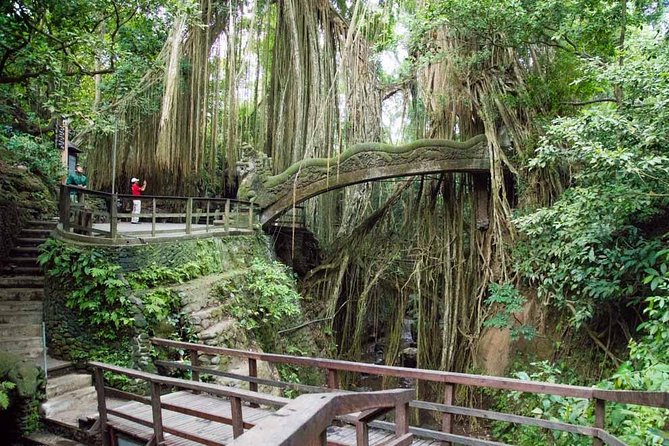
The Sacred Monkey Forest Sanctuary, also called Mandala Suci Wenara Wana, receives the first hour. Admission is included, so there is no separate entrance fee to sort out when you arrive.
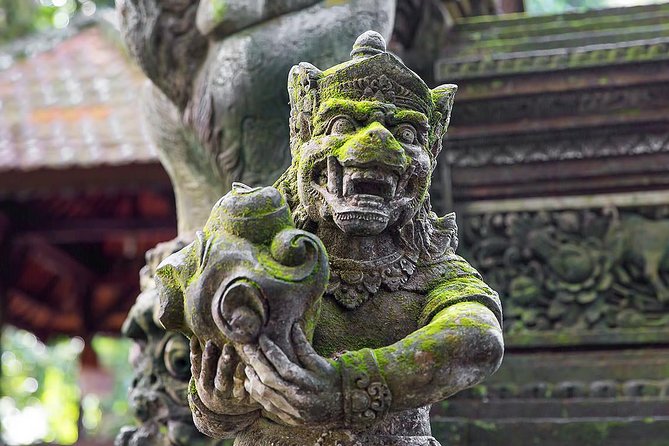
This is not only a wildlife stop. The forest is protected by the local government and has an important role in Hinduism. Three old temples sit within the grounds, giving the visit a different feel from an ordinary animal park. The combination of mossy statues, temple structures, and macaques makes this the strongest photo stop of the morning.
You can expect the monkeys to be close. That is part of the fun, but it also calls for care. Keep your belongings secure and follow the instructions given at the sanctuary. The supplied details do not specify exact animal rules, so your guide is the best person to ask about food, bags, phones, and personal space on the day.
One hour is enough for an introduction and a walk through part of the sanctuary. It is not a long visit for someone who wants to see every path or spend a great deal of time waiting for the perfect photograph. If the forest is your main reason for booking, ask at the start how the hour will be handled.
I would place this stop first in your expectations, not last. It gives the tour its sense of place. The statues and temples make clear that you are visiting a living cultural site, while the monkeys provide the lively, unpredictable part of the morning.
Mas and the craft of wood carving
The next hour is spent in Mas Village, a traditional community in Ubud’s Gianyar area known as a center for Balinese wood carving. This is a useful stop if you want to understand where the carved figures and decorative pieces sold around Bali come from.
Mas is less about a single landmark and more about the craft itself. You might find carved figures, panels, or household decorations, with the quality and price varying from piece to piece. The tour description specifically presents the village as a place to shop for artisan souvenirs, so expect a browsing and buying opportunity rather than a formal museum visit.
Your guide can add value here by explaining what you are looking at. Kana’s strength, according to the information provided, was connecting objects and places to Balinese culture and local communities. That sort of context helps you distinguish a meaningful purchase from something you simply like at first glance.
An hour is a sensible amount of time for a first visit, but serious shoppers may want longer. Large wood pieces can also be awkward to carry, and the tour does not state how shipping is handled. Ask the seller and guide before committing to anything bulky.
I like this stop because it moves the tour beyond sightseeing. You are not just looking at Balinese design in a hotel shop. You are visiting a village identified with the work itself. Still, if you are not shopping, the stop may feel shorter in substance than the monkey forest.
Celuk Village and Balinese silver jewelry
Celuk Village gives you a different side of Bali’s craft economy. The village is near Ubud in Gianyar Regency and is associated with traditional silver jewelry. This is the place to look for rings, bracelets, earrings, necklaces, and other small items that fit easily into your luggage.
The value of the stop depends on your interest in jewelry. If you enjoy browsing, the hour gives you time to compare styles and prices without using up your Ubud market time. If jewelry is not on your list, this may feel like a shopping detour.
Because the tour is private, you can ask questions as you browse. Find out what is silver, how the piece is made, and whether the price reflects handwork or design. The supplied details do not promise a workshop demonstration, so do not book this expecting a hands-on lesson. Think of it as a chance to see and purchase local silverwork in its main village setting.
I would also keep your spending plan in mind. The $71 tour price includes the vehicle, guide, taxes, and Monkey Forest admission, but it does not include purchases. That matters here and in Mas. The tour can introduce you to local crafts, but the shopping bill is entirely separate.
The order of Mas and Celuk gives the morning a useful rhythm. Wood carving offers larger, more sculptural pieces. Celuk offers smaller items that are easier to compare, carry, and take home.
More Ubud days from the south:
- Best Of Ubud Tours
★ 5.0 · 75 reviews - Bali Private inclusive tour: Best of Ubud in a Day
★ 5.0 · 48 reviews - Ubud waterfall, rice terraces, and swing explore
★ 5.0 · 20 reviews - Ubud Temples, Waterfalls, Rice Terraces & Balinese Culture
★ 5.0 · 14 reviews
Ubud Traditional Art Market
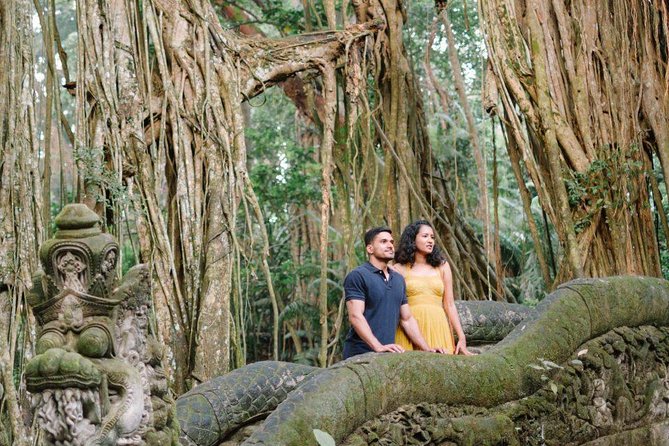
The final hour takes you to Ubud Traditional Art Market, or Pasar Seni Ubud. It is opposite Ubud Royal Palace and is open daily. Compared with the village stops, this is the broadest and most casual shopping section.
You can look for silk scarves, lightweight shirts, handmade woven bags, baskets, hats, and other souvenirs. The market is a good place to compare several kinds of Balinese handicraft in one location. It also lets you shop for practical gifts rather than only decorative pieces.
This stop works best if you arrive with a clear idea of what you want. A market can eat up an hour quickly, and bargaining, comparison, and browsing all take time. Ask your guide about the meeting point and return time before walking off to shop.
The market is opposite the royal palace, so the location is convenient for anyone who wants a quick look at central Ubud. The tour does not say that palace admission is included, and the palace is not listed as a scheduled stop. Plan on viewing the market area rather than building your morning around an additional palace visit.
I see this as a practical finish. After the forest and village visits, you have one last chance to find a scarf, bag, basket, or shirt without needing another shopping trip. It also gives you more choice than the specialist stops, though it may feel less personal than buying directly in Mas or Celuk.
What the private transport adds
Pickup is offered from hotels in south Bali and the Ubud area, with a listed start time of 9:00 am. The exact meeting point depends on your hotel, so confirm that when booking. The vehicle is air-conditioned, which is a real comfort during a morning of moving between stops.
A private car is especially useful for couples, families, or small groups with mixed interests. One person can ask for cultural explanation, another can browse jewelry, and nobody has to wait for a large bus to reload. The private format also means you are not sharing the four-hour schedule with strangers.
The tradeoff is price. At $71, this is not the cheapest way to see one Ubud attraction. But the fee covers private transportation, an English-speaking driver or guide, taxes, and Monkey Forest entry. For a group, the per-person cost may become more reasonable, and group discounts are offered, though no discount amount is provided.
For a solo visitor, the value is less obvious if you only want the sanctuary. For two or more people coming from south Bali, the included transfers and several stops make the price easier to justify. Lunch is not included, and tips are also separate.
What the four-hour schedule really means
The tour gives each stop about one hour. That sounds generous on paper, but it includes getting out of the vehicle, entering or orienting yourself, walking, browsing, and returning to the car.
The schedule is best for a sampler visit. You will see the main character of each place, then move on before the day becomes tiring. It is not designed for a full morning at the sanctuary, an extended craft lesson, or serious market shopping.
Traffic can affect any road-based outing in Bali, but no travel time estimates beyond the four-hour duration are provided. If you have a flight, spa booking, or another timed activity afterward, leave extra room. The tour is described as approximately four hours, not a guaranteed exact finish.
The short format is a benefit if you have limited time in Bali. You can use the afternoon for Ubud on your own or return to your hotel. It is less suitable if you prefer to linger, sketch, photograph, or ask detailed questions at every stop.
What the guide can add
The driver is a central part of this experience. You are not simply receiving a car and a list of addresses. The included service is an English-speaking driver or guide, and the strongest praise attached to the tour focuses on cultural explanation, escorting at the stops, safety, and comfort.
Kana was singled out for discussing Balinese history, culture, scenery, and local communities. Another account describes a bottle of water, commentary throughout the drive, and help at every stop. Dedy was noted for making the ride feel safe and comfortable while sharing details about Balinese culture.
Those details set a useful expectation. The guide may be the difference between a basic shopping circuit and a more meaningful introduction to Ubud. Ask questions as you go. The supplied information does not guarantee that Kana or Dedy will lead every departure, so treat those names as examples of guides associated with the experience, not a promise of assignment.
Who should book this tour
I would recommend it to a first-time Bali visitor who wants a quick introduction to Ubud without arranging transport. It also suits anyone staying in Jimbaran or elsewhere in south Bali who wants to combine sightseeing and shopping in one morning.
It is a good fit for:
- Couples or families who want a private vehicle
- People with only half a day available
- Visitors interested in both Hindu culture and Balinese crafts
- Shoppers looking for silver jewelry, wood carvings, clothing, and woven goods
- Anyone who prefers a local guide’s explanation to exploring alone
I would hesitate if your main goal is an extended wildlife visit. You may also want a different plan if you dislike shopping stops or already have a full day arranged in Ubud. In that case, paying for a private tour that spends three of its four hours at craft villages and a market may not be the best use of your time.
Confirmation is provided at booking, and the information says most people can participate. You can cancel for a full refund up to 24 hours before the local start time. Changes or cancellations inside that window are not accepted for a refund.
Final call: good value for a compact Ubud introduction
Book this tour if you want convenient transport, a private guide, and four distinct Ubud experiences in one morning. The Sacred Monkey Forest gives you the strongest cultural setting, while Mas, Celuk, and the market add useful chances to see and buy Balinese craftwork.
The $71 price is easiest to defend for a small group coming from south Bali, since the car, guide, taxes, and Monkey Forest admission are included. It is harder to justify for a solo visitor who wants only monkeys and temples.
My practical advice is simple: choose this as an overview tour. Ask for cultural context from your guide, decide in advance how much shopping you want, and remember that one hour per stop is a sampler, not a full visit. If that matches your plans, this private route offers a tidy way to meet Ubud in a limited amount of time.
FAQ
Where does the Ubud Sacred Monkey Forest and Art Village Tour take place?
The tour visits the Sacred Monkey Forest Sanctuary, Mas Village, Celuk Village, and Ubud Traditional Art Market in and around Ubud, Bali.
How long does the tour last?
The tour lasts approximately four hours, with about one hour planned at each of the four stops.
What time does the tour start?
The listed start time is 9:00 am.
Is hotel pickup available?
Yes. Pickup is offered from hotels in south Bali and the Ubud area.
Is this a private tour?
Yes. Only your group participates in the activity.
Is transportation included?
Yes. Private transportation in an air-conditioned vehicle is included.
Is a guide included?
Yes. An English-speaking driver or guide is included. Guides associated with the experience include Kana and Dedy, but a specific guide is not guaranteed in the provided information.
Is admission to the Monkey Forest included?
Yes. Entrance to the Sacred Monkey Forest is included, along with all listed fees and taxes.
Are meals included?
No. Lunch is not included.
Can I cancel for a refund?
Yes. You can cancel at least 24 hours before the local start time for a full refund. Cancellations or changes made less than 24 hours before the start are not accepted for a refund.
Just added around Jimbaran
- Bali Fun Ride Quad Bike ATV and Waterfall Tour★ 4.0 · 3 reviews
- Bali Sunset: Uluwatu Temple, Kecak Dance and Jimbaran★ 4.5 · 3 reviews
- Jimbaran Beach Candle Light Dinner★ 3.5 · 3 reviews
- LuxMe Bali Four Hands massage with Hotel Transfer★ 5.0 · 3 reviews
- Full-Day Scuba Diving Experience of USAT Liberty in Tulamben★ 5.0 · 3 reviews
- Romantic Seafood Dinner at Jimbaran★ 3.5 · 3 reviews
- Cretya Ubud and Monkey Forest Sanctuary Tours★ 5.0 · 3 reviews
- Royal Traditional Lulur Balinese Massage 2 hours Spa At Nusa Dua Bali★ 5.0 · 4 reviews
Monkey Forest Tours, compared.
Ubud Day Tour: Sacred Monkey Forest, Tegenungan Waterfall, Rice Terrace
Read our review →
Ubud Monkey Forest – Rice Terrace – Jungle Swing – Water Temple
Read our review →
Ubud Small Group Tour: Monkey Forest, Tegalalang Rice Terraces and more
Read our review →
Swing – Monkey Forest – Waterfall – Temple – Rice Terraces – Art Crafts
Read our review →
All Ticket Inclusive-Blue Lagoon Snorkeling-Ubud Monkey Forest & Ubud Waterfall
Read our review →
Private Tour : Bali Best Waterfalls, Temples and Monkey Forest
Read our review →
Bali Adventure ATV Quad Bike, Monkey Forest and Waterfalls
Read our review →
Bali Private Tour: Waterfall, Monkey forest and Tanah lot sunset
Read our review →Browse the lists this tour appears in