
Reviewed · KUTA
Indonesia: Garuda Wisnu Kencana
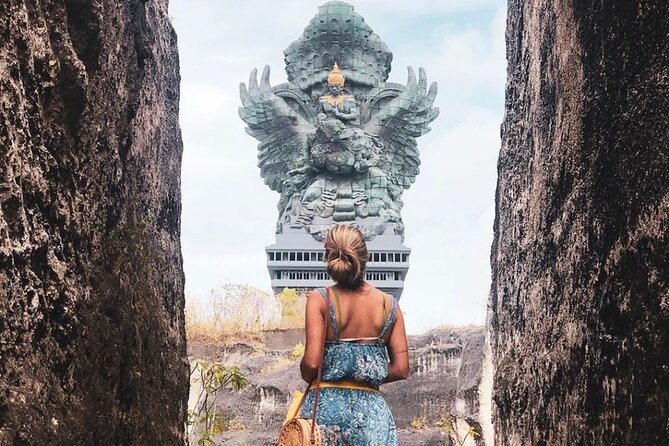
Garuda Wisnu Kencana is Bali on a grand scale: a 120.9-meter statue of Lord Wisnu riding the mythical Garuda, set among vast courtyards on the Bukit Peninsula. I like the clear cultural story behind the monument, and I like that your visit can include far more than a photo stop, with Balinese dance, folklore, sculpture, and views across the island.
I also like the low listed price of $6.22 per person, especially if you plan your visit around a performance. The main drawback is value: the park is large, and some activities or transport services may cost extra, so the basic admission can feel thin if you only see the statues and leave.
In This Review
- Key points to know before you go
- Meeting Wisnu and Garuda above Bali
- What the 60-hectare park feels like on foot
- Planning your visit around Balinese performances
- More than a statue: mythology, sculpture, and food
- How much time should you allow?
- Is the $6.22 ticket good value?
- Getting there from Kuta and handling the ticket
- Who will get the most from GWK?
- Should you book Garuda Wisnu Kencana?
- FAQ
- Where is Garuda Wisnu Kencana Cultural Park?
- How much does the experience cost?
- How long does a visit take?
- Is the ticket available on a mobile phone?
- Is the booking confirmation the official entry ticket?
- Are children under 100 centimeters charged?
- How many people and arrivals does one ticket cover?
- When are Balinese cultural performances held?
- Can I reach the park using public transportation?
- Can I cancel or change the booking?
Key points to know before you go
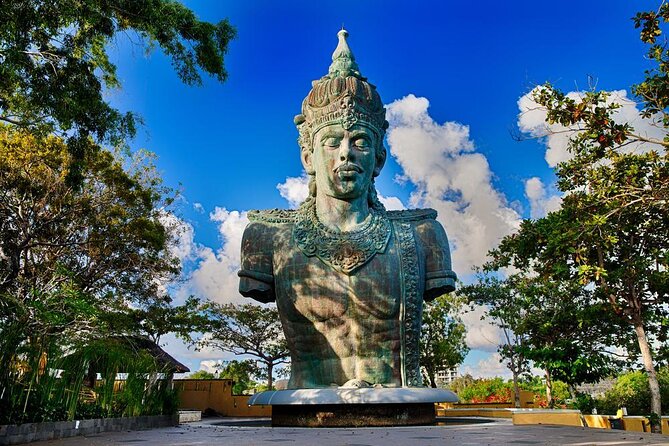
- The statue reaches 120.9 meters, with a 64-meter wingspan and copper, brass, and steel construction.
- Balinese performances run throughout the day, including the 18.00 WITA Kecak show.
- The park covers 60 hectares, so walking between sights takes time and effort.
- The $6.22 admission is inexpensive, but add-on shows, buggy rides, or special statue access can change the total cost.
- A mobile ticket is provided, but the booking confirmation is not the official entry ticket.
- The experience usually takes two to three hours, though a full show schedule can keep you there longer.
Meeting Wisnu and Garuda above Bali
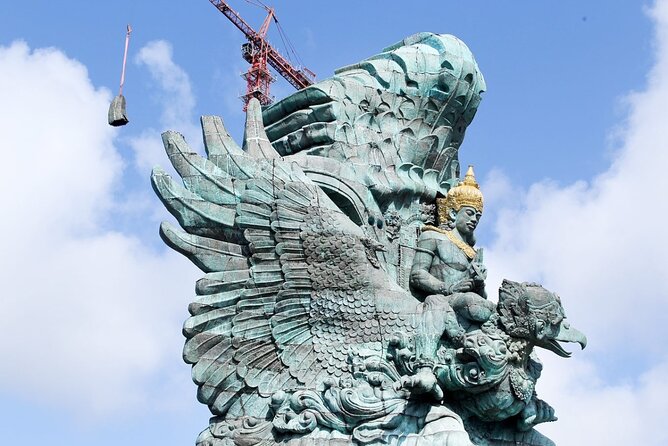
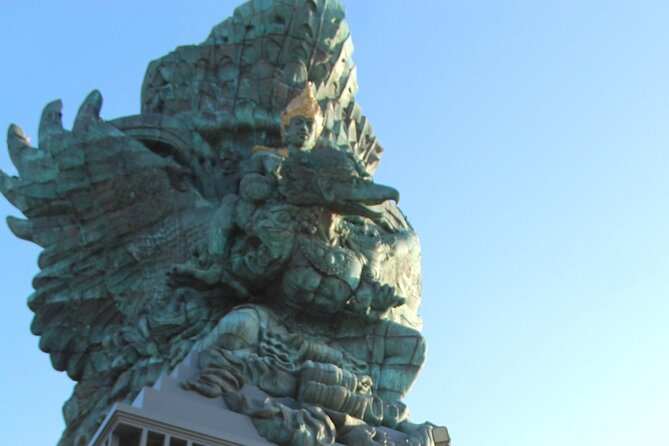
The park’s central attraction is the Garuda Wisnu Kencana statue, created by Balinese artist Nyoman Nuarta. It shows Lord Wisnu seated on Garuda, a powerful bird figure from Hindu mythology and the national emblem of Indonesia.
The symbolism gives the sculpture more weight than its size alone. Wisnu represents protection, while Garuda is linked with loyalty and freedom from oppression. Together, they express a national and cultural ideal that is easy to understand even if you know little about Balinese Hindu tradition.
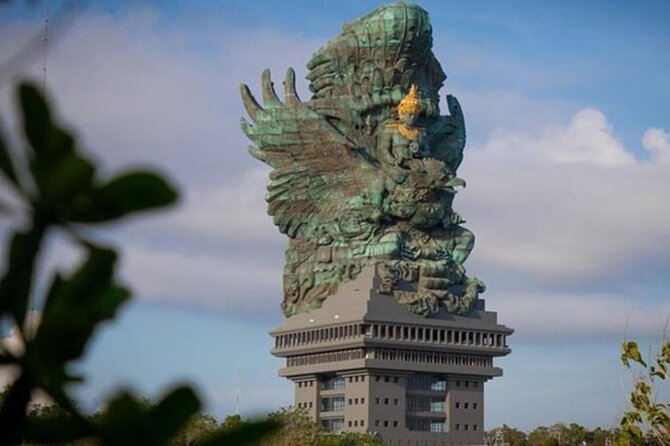
The dimensions are hard to grasp until you see the statue in person. At 120.9 meters, it is taller than the Statue of Liberty and Christ the Redeemer. Its wings stretch 64 meters, and the surface includes gold mosaic crowns. Copper, brass, and steel give the figure a strong metallic presence that changes with the light.
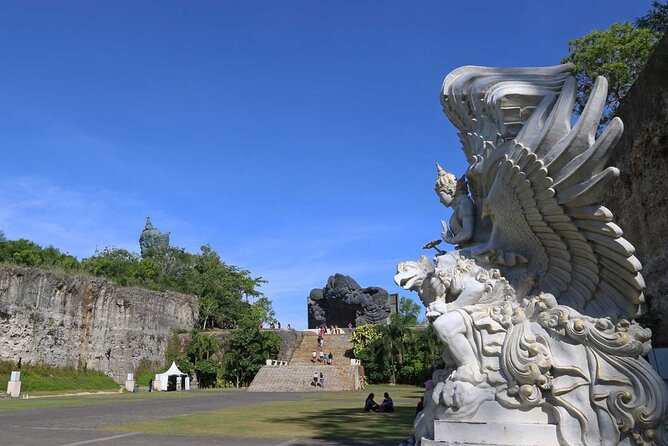
I would allow time to look beyond the obvious photo. Notice how the statue is framed by the open courtyards and rugged hills of the Bukit Peninsula. The setting makes the monument feel less like an isolated sculpture and more like the center of a ceremonial park.
One important point: the statue is not the only attraction, but it is the reason most people come. If you expect a museum with room after room of artifacts, this is not that kind of visit. GWK is an open-air cultural complex built around large-scale figures, performance spaces, gardens, views, and public plazas.
Other Kuta days people book alongside this one:
- Nusa Penida day trip: boat, 4 snorkeling, Manta rays & Land tour
★ 5.0 · 2,033 reviews - Bali Nusa Penida West Private All-Inclusive Tour
★ 5.0 · 1,277 reviews - Mount Batur Sunrise Trekking Private Tour with Breakfast and Hotel Transfer
★ 5.0 · 885 reviews
What the 60-hectare park feels like on foot
GWK Cultural Park is huge by normal sightseeing standards. The 60-hectare site includes the main statue, additional sculptures, broad plazas, an amphitheater, Lotus Pond, and spaces for cultural events.
You can explore on foot, but the size matters. A two-hour visit may be enough for the main statue, a few photographs, and one performance. It may not be enough for every corner, especially if you stop for food or wait for a scheduled show.
The park’s scale is one of its strengths and one of its weaknesses. Large spaces give the statue room to breathe, and the open setting makes photographs easier. At the same time, the experience can feel sparse if you arrive without a plan.
I would check the performance schedule before entering. Then choose one or two areas to see between shows. A buggy service may be useful if you want to cover more ground with less walking. A scheduled buggy tour reportedly runs every 15 minutes, though waiting times can increase when demand is high.
You may also find options to explore by Segway. The supplied information does not specify an additional price or exact route, so check the terms of your chosen ticket before counting on it as part of admission.
The weather deserves attention. A thunder shower once interrupted an attempt to see more of the park, and the open plazas offer limited shelter while you move between areas. Bring a plan for rain and do not schedule the visit so tightly that a sudden storm ruins your only chance to see a show.
Planning your visit around Balinese performances
The cultural program is the best way to add meaning to the entrance fee. Performances are scheduled every hour through the day, with dances and theater-style pieces spread between the Amphitheater, Plaza Wisnu, and Lotus Pond.
The schedule provided is:
- 11.00 WITA, Amphitheater: Tari Sekar Jepun, Tari Kebyar Duduk, and Topeng Kenyum Manis
- 12.00 WITA, Amphitheater: Tari Jauk Keras, Tari Oleg Tamulilingan, and Tari Kebyar Duduk
- 13.00 WITA, Amphitheater: Tari Sekar Jepun and Tari Jauk Manis
- 14.00 WITA, Amphitheater: Tari Topeng Monyer and Tari Jauk Manis
- 15.00 WITA, Amphitheater: Tari Oleg Tamulilingan and Tari Barong-Bojog
- 16.00 WITA, Plaza Wisnu: Parade Budaya Bali
- 17.00 WITA, Lotus Pond: Joged Bumbung
- 18.00 WITA, Lotus Pond: Kecak, Garuda Wisnu Kencana
WITA is the local time used in Bali. The 18.00 Kecak performance is the most useful choice if you want to combine the park with a late afternoon visit. It gives you time to see the statue first, then finish with a famous Balinese performance as daylight fades.
If you arrive earlier, the 16.00 cultural parade and 17.00 Joged Bumbung performance create a natural sequence. You should still confirm the day’s timing at the park, since the schedule can be affected by weather or operations.
The main value question is simple: do you plan to see a performance? If yes, the admission feels more worthwhile. If you only walk past three large statues and take photographs, the price can seem less attractive, particularly if a separate show ticket is required for the event you want.
More than a statue: mythology, sculpture, and food
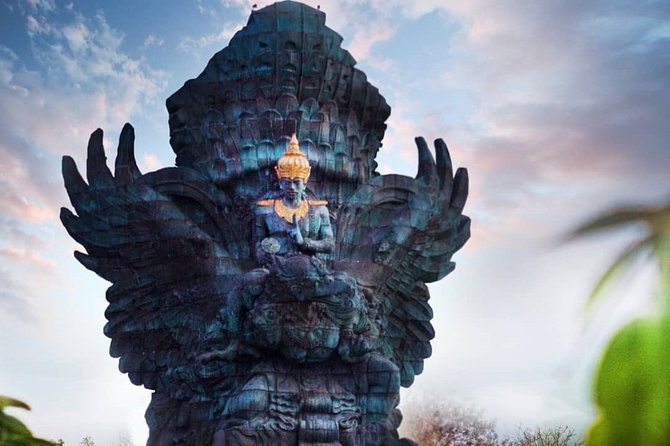
GWK is designed to present Indonesian heritage through several forms, not just through its main monument. You will see large sculptures, hear stories connected to Wisnu and Garuda, and encounter Balinese cultural performances in dedicated public spaces.
Indonesian heritage cuisine is also part of the park experience. The information provided does not say that a meal is included in the $6.22 admission, so treat food as an optional purchase rather than part of the ticket value.
The mythology helps explain why the statue matters. Wisnu is not simply a decorative Hindu figure, and Garuda is not merely a giant bird for photographs. Their partnership points to protection, duty, loyalty, and freedom. That background gives you something to look for as you move through the park.
The park also uses dramatic presentation and folklore tales to frame Indonesian identity. This may appeal to you if you enjoy cultural attractions that tell a story through performance and public art rather than through formal museum displays.
It may disappoint you if you want a dense collection of historic objects. GWK is a modern cultural park, and the statue itself was created by Nyoman Nuarta. Its purpose is to express cultural and national pride in a contemporary monumental form.
Same island, a completely different kind of day:
- Individual Bali Day Trip with Private Driver and Free WiFi
★ 5.0 · 755 reviews - Waterbom Bali Tickets – Single Day Pass
★ 4.5 · 620 reviews - Private Tour Mount Batur Sunrise Trekking and Natural Hot Spring
★ 5.0 · 431 reviews - Private Tour Bali Beaches and Uluwatu Temple with Dinner
★ 5.0 · 363 reviews
How much time should you allow?
The stated visit length is about two to three hours. That works well for a focused plan:
- Enter and go first to the main Garuda Wisnu Kencana statue.
- Walk through the surrounding courtyards and see the other major sculptures.
- Choose one scheduled performance.
- Leave time for photographs, a meal, or a transfer through the park.
A quick visit can work in two hours if you skip long waits and do not try to see every show. A longer visit makes more sense if you want the 18.00 Kecak performance or a guided visit to the top of the statue.
One ticket option used by a visitor included a guided tour at the top of the statue. The guide was praised for explaining the site well, and the package was considered good value. Do not assume that upper-level access is part of every admission ticket. Check the exact product description before booking, since the basic information here confirms park admission but does not promise that extra access.
A scheduled tour can also create a time cost. One visitor decided not to go up because the wait was expected to reach an hour. That is useful advice: a special viewpoint may sound appealing, but a long wait can take up much of a two or three-hour visit.
Is the $6.22 ticket good value?
At $6.22, the base price is modest for a major attraction with a giant monument, open-air spaces, cultural programming, and access to scheduled performances. I think it can be good value when you use the park as a half-day cultural outing rather than a quick statue photograph.
The price becomes harder to justify if you pay extra for several add-ons and still see only a small part of the park. Buggy service, Segway use, special access, and some shows may not be included in the basic admission. Read the ticket details carefully so you know what you are buying.
The strongest value comes from timing. Arrive with a performance in mind, then use the waiting period to see the statue and nearby plazas. If you simply arrive at a random time and leave before the next event, the park may feel unfinished.
The low price also makes GWK a reasonable choice for families and first-time visitors who want a broad introduction to Balinese culture without committing to a full-day tour. Children under 100 centimeters enter free, which can help families keep the cost down.
Getting there from Kuta and handling the ticket
GWK is in the Kuta area on Bali’s Bukit Peninsula. It is near public transportation, and one visitor reached the park from Kuta by Grab bike in about 30 minutes. That travel time is not guaranteed, since traffic and weather can change the journey, but it gives you a useful planning guide.
The ticket is mobile, which is convenient. You receive a booking confirmation at the time of purchase, but that confirmation is not the official entry ticket. The official ticket is sent within 24 hours, so check your email before setting out.
Each ticket is valid for one person and one arrival time. That means you should not treat it as an open-use pass for several people or multiple entries. Keep the official ticket ready on your phone when you reach the entrance.
The booking is non-refundable and cannot be changed for any reason. I would only buy once your date and arrival plan are firm. This is especially important in Bali, where heavy rain can alter an outdoor visit.
Most people can take part, and the park is near public transportation. The information does not provide detailed access notes for every path, performance space, or buggy service, so contact the provider if you need a specific mobility arrangement.
Who will get the most from GWK?
I would recommend this experience to you if you like large public art, Indonesian mythology, cultural dance, and open-air sightseeing. It also suits families who want a short outing with several types of activity in one place.
It works well for first-time visitors to Bali because the symbols are easy to follow. You can see one of the island’s most recognizable modern monuments, hear stories about Wisnu and Garuda, and watch a Balinese performance without planning several separate stops.
Photographers should enjoy the scale and framing of the statue, especially in the courtyards around the monument. You will have plenty of visual material, though the open setting can make hot weather or rain more noticeable.
I would be more cautious if you dislike large purpose-built attractions or prefer small temples, local neighborhoods, and living cultural sites. GWK presents Bali through a modern, highly planned park. It offers a clear introduction, but it is not a substitute for exploring the island’s temples, villages, or markets.
Should you book Garuda Wisnu Kencana?
Book it if you can match your arrival with a cultural performance and you want to see Bali’s enormous Wisnu and Garuda monument up close. At $6.22, the basic ticket is reasonable when you spend two or three hours using the park’s spaces rather than rushing through.
Before paying, check three things: which shows are included, whether transport inside the park costs extra, and whether statue-top access is part of your ticket. I would also save the official ticket to your phone, allow for a possible 30-minute ride from Kuta, and avoid a schedule that leaves no room for rain.
Skip it if your only goal is a quick photograph of the statue and you are unwilling to pay for optional services. GWK is best approached as a planned cultural stop, with one performance at the center of your visit.
FAQ
Where is Garuda Wisnu Kencana Cultural Park?
The park is in Kuta, Indonesia, on Bali’s Bukit Peninsula.
How much does the experience cost?
The listed price is $6.22 per person.
How long does a visit take?
The expected duration is approximately two to three hours.
Is the ticket available on a mobile phone?
Yes. The experience includes a mobile ticket.
Is the booking confirmation the official entry ticket?
No. The Viator or TripAdvisor confirmation is not the official ticket. The official ticket is sent within 24 hours.
Are children under 100 centimeters charged?
No. Children under 100 centimeters are free of charge.
How many people and arrivals does one ticket cover?
One ticket is valid for one person and one time of arrival.
When are Balinese cultural performances held?
Performances are scheduled throughout the day. Listed times run from 11.00 WITA through 18.00 WITA, with Kecak, Garuda Wisnu Kencana scheduled at 18.00 WITA.
Can I reach the park using public transportation?
The park is near public transportation. A visitor also reached it from Kuta by Grab bike in about 30 minutes.
Can I cancel or change the booking?
No. The experience is non-refundable and cannot be changed for any reason.
Just added around Kuta
- Bali Sky Gate and Water Palace★ 5.0 · 3 reviews
- Bali 2 Hours Spa Packages – Refresh Your Body and Mind★ 5.0 · 3 reviews
- Bali Quad Adventure with Waterfall Tour★ 5.0 · 3 reviews
- 2 PADI Certified Dives at Tulamben from Bali★ 5.0 · 3 reviews
- Romantic Couple Treatment at ANJALI SPA★ 5.0 · 3 reviews
- Private Tour : Individual costumize route with FREE – WIFI★ 5.0 · 3 reviews
- Bali: Ubud (Temple, Spring, Rice Terraces, & Waterfall)★ 5.0 · 3 reviews
- Balinase Cooking Class and Private Ubud Day Tour★ 5.0 · 3 reviews